DAYAK
PADDLE
B O R N E O
DAYAK PADDLE
-
Early 20th century
-
Borneo
-
Kenyah/Kayan peoples
-
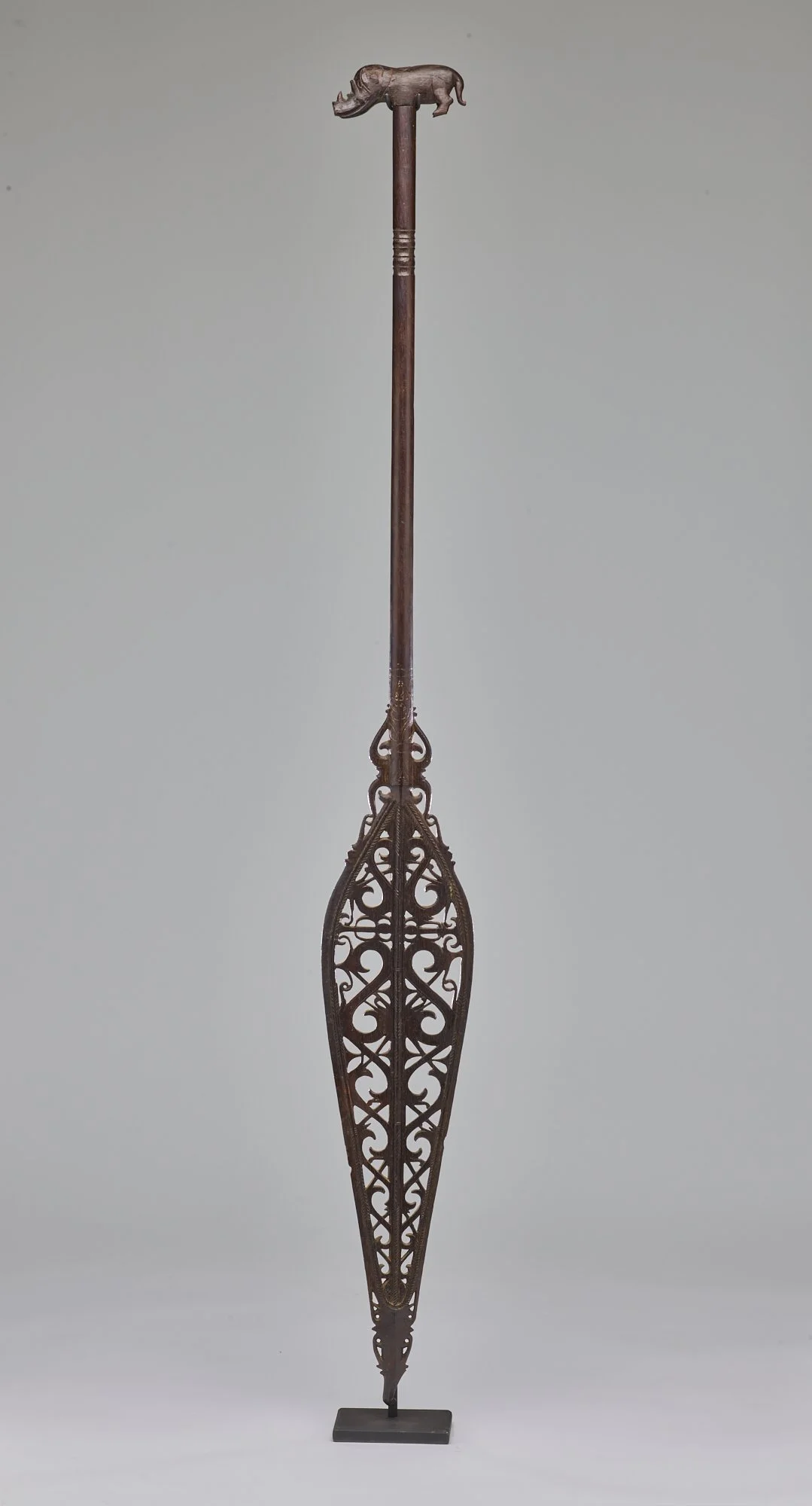
Fine tight-grained black ironwood. Some minor cosmetic restorations.
-
Height: 111.76 cm (44 in)
Height including base: 114.3 cm (45 in)
Width: 13.0175 cm (5.125 in) -
Colonial period
Old Dutch collection
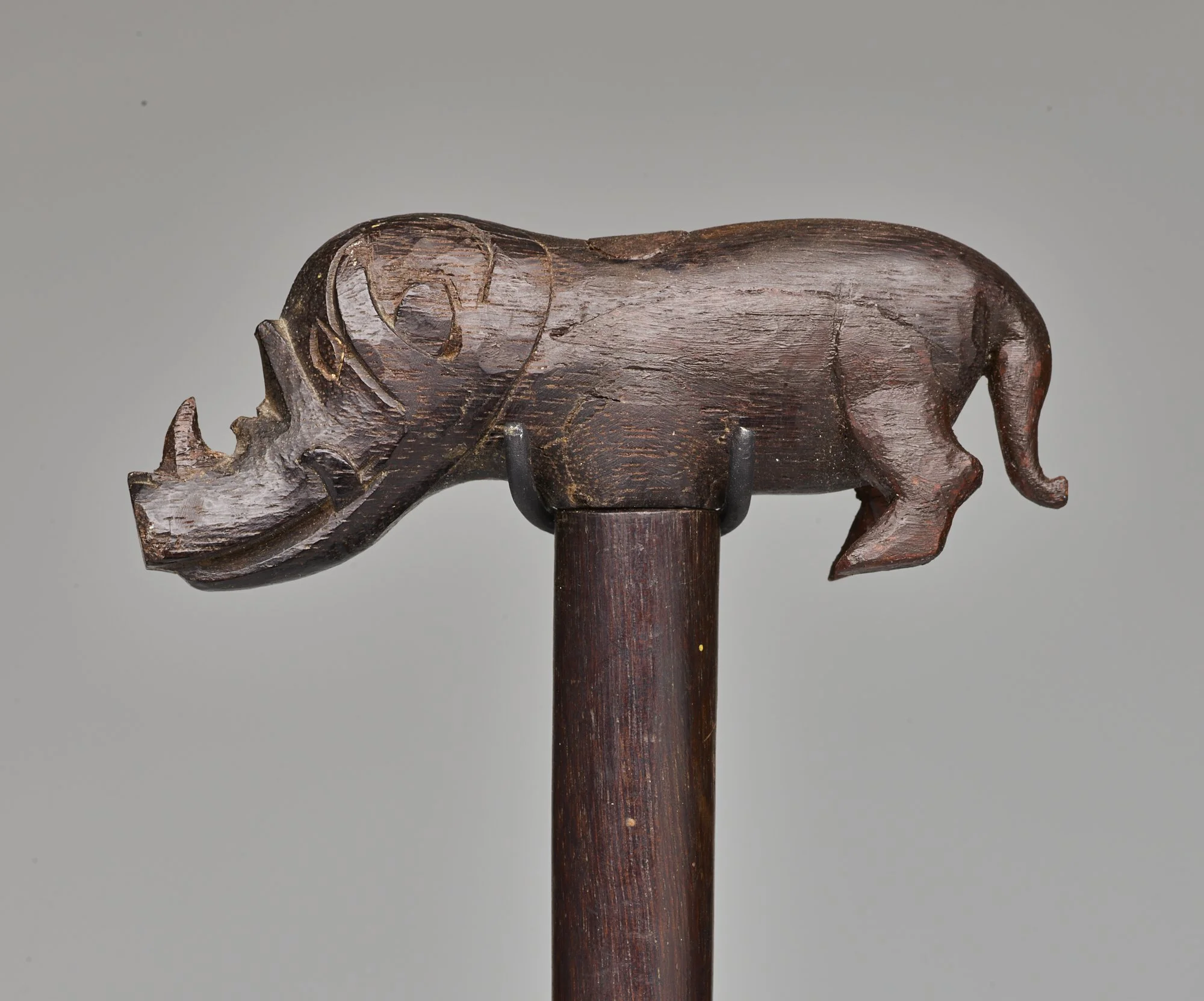
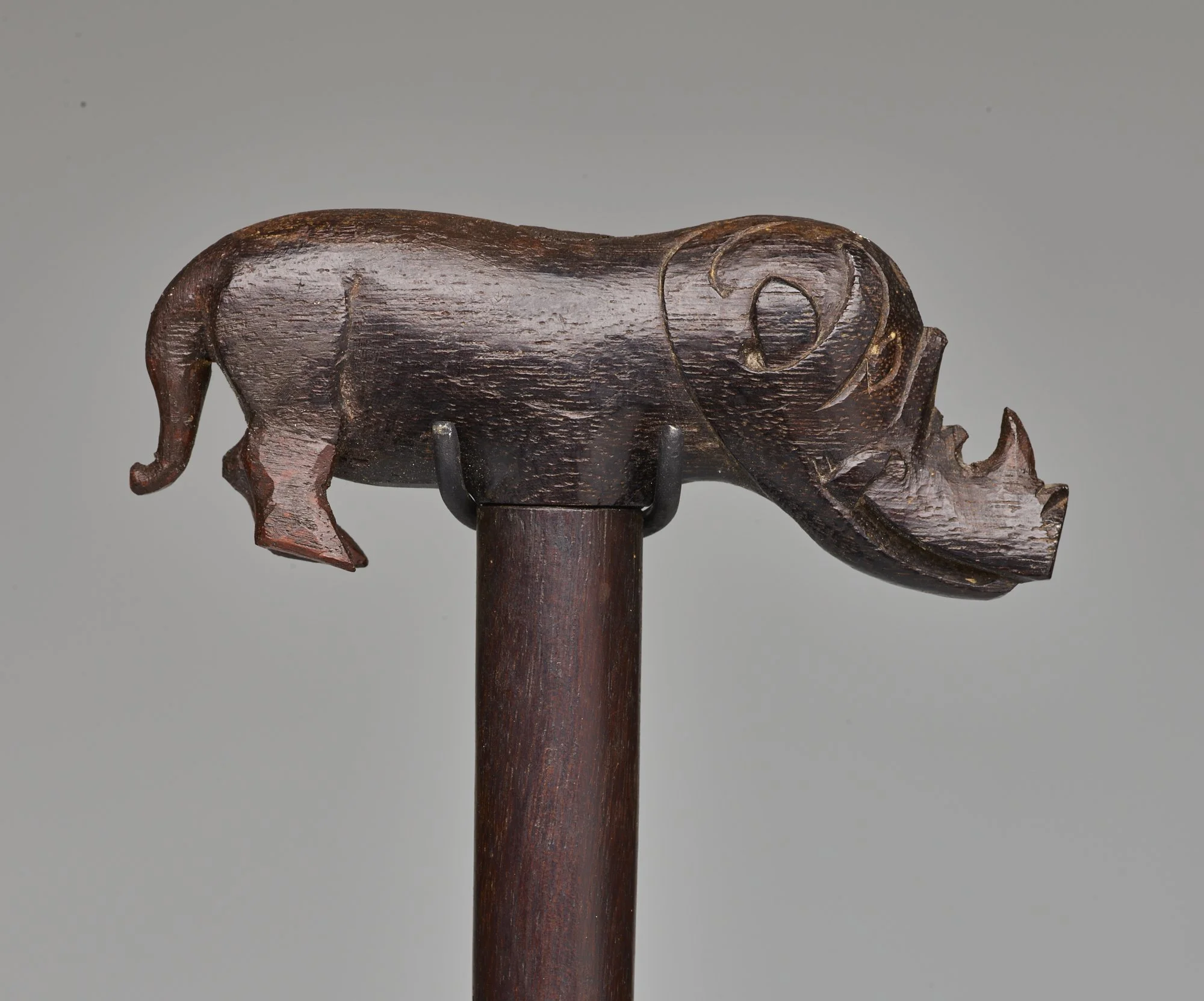
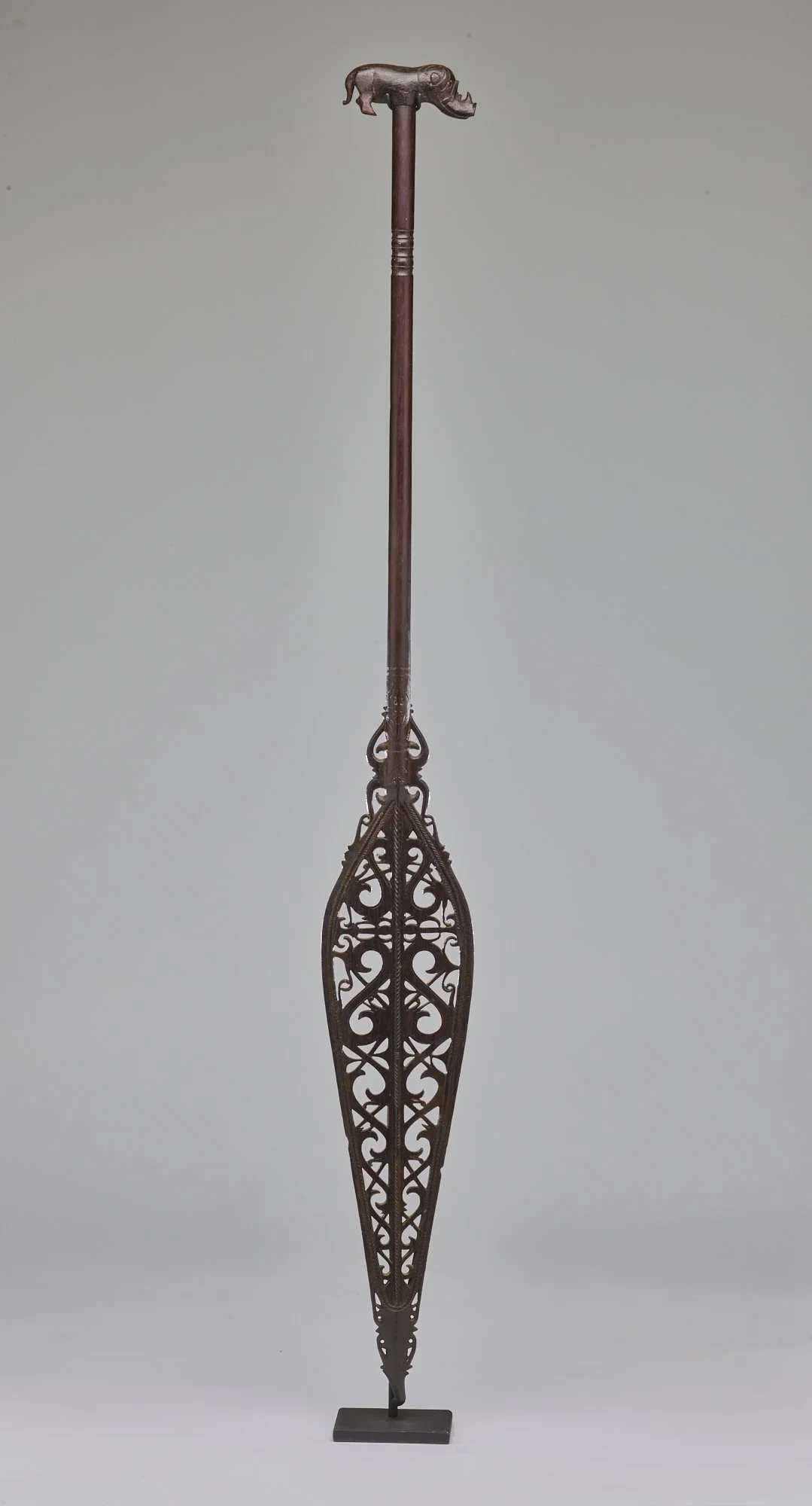
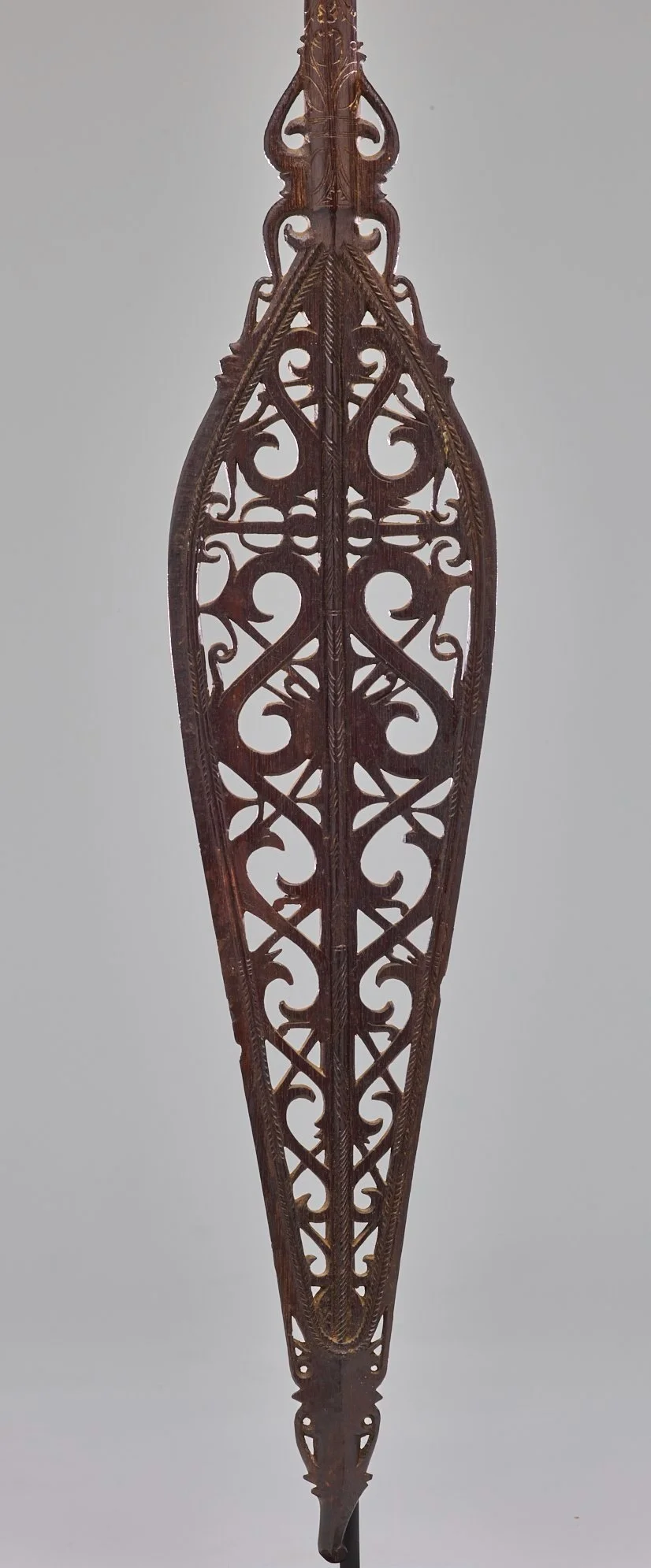
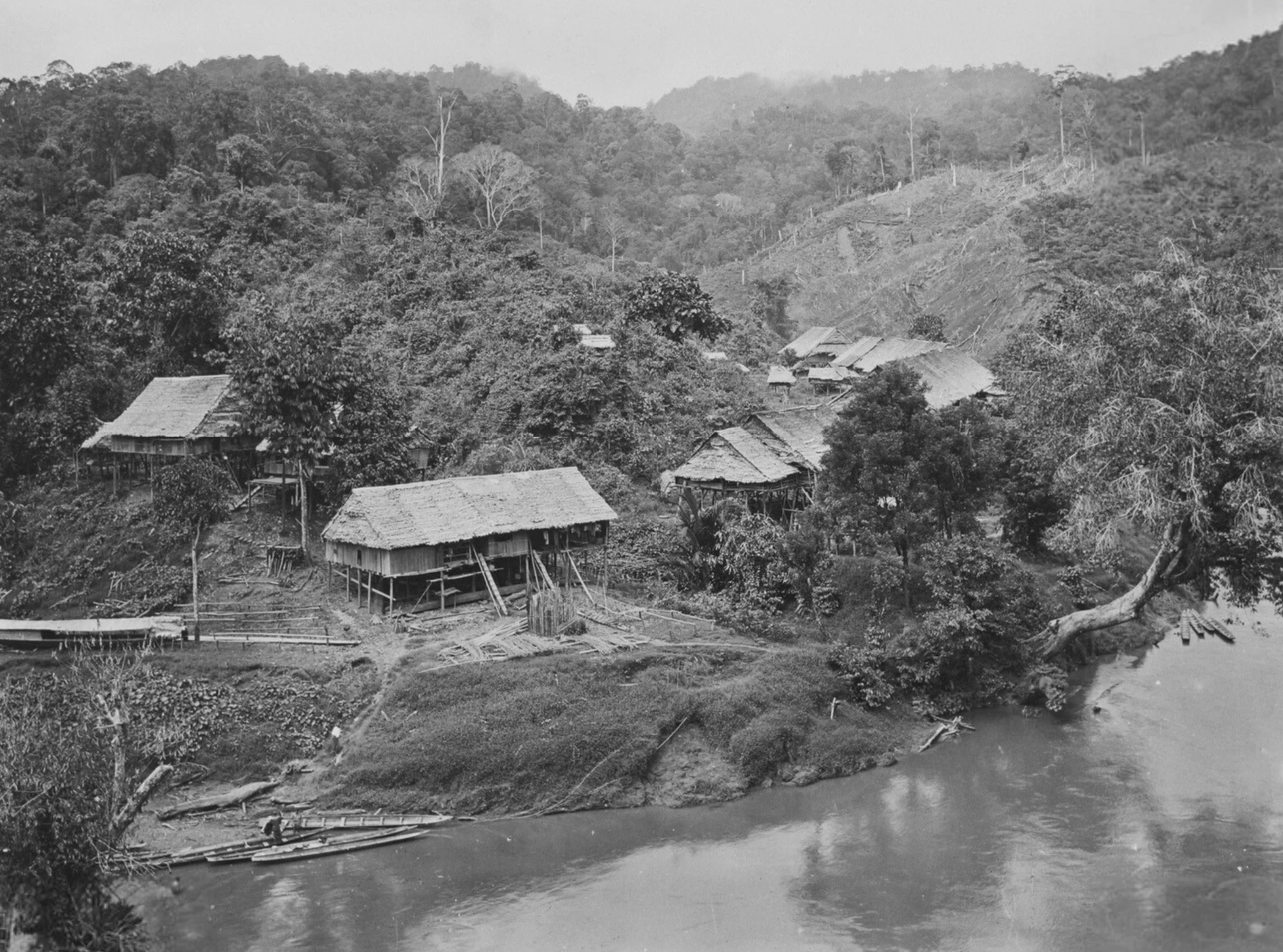
For traditional Dayaks, rivers are the highways by which accumulated wealth and the necessities of life come and go. In addition to bringing blessings, rivers were also the primary routes by which one's enemies traveled, as did unseen forms of malevolency or illnesses that needed to be held at bay over vast swaths of jungle and forest that lacked roadways or well-developed trails. Some scholars suggest that the word "Dayak' is derived from the Austronesian word meaning (moving) "towards the interior."
Aside from their functional use, paddles can also be said to reflect the ability to navigate the vicissitudes of life, to steer oneself through life's sometimes turbulent waters safely. In this way, paddles can be acclaimed objects that were used in exchanges at wedding ceremonies and in miniature or when heavily designed for dances, auguries, and as prestige gift items.
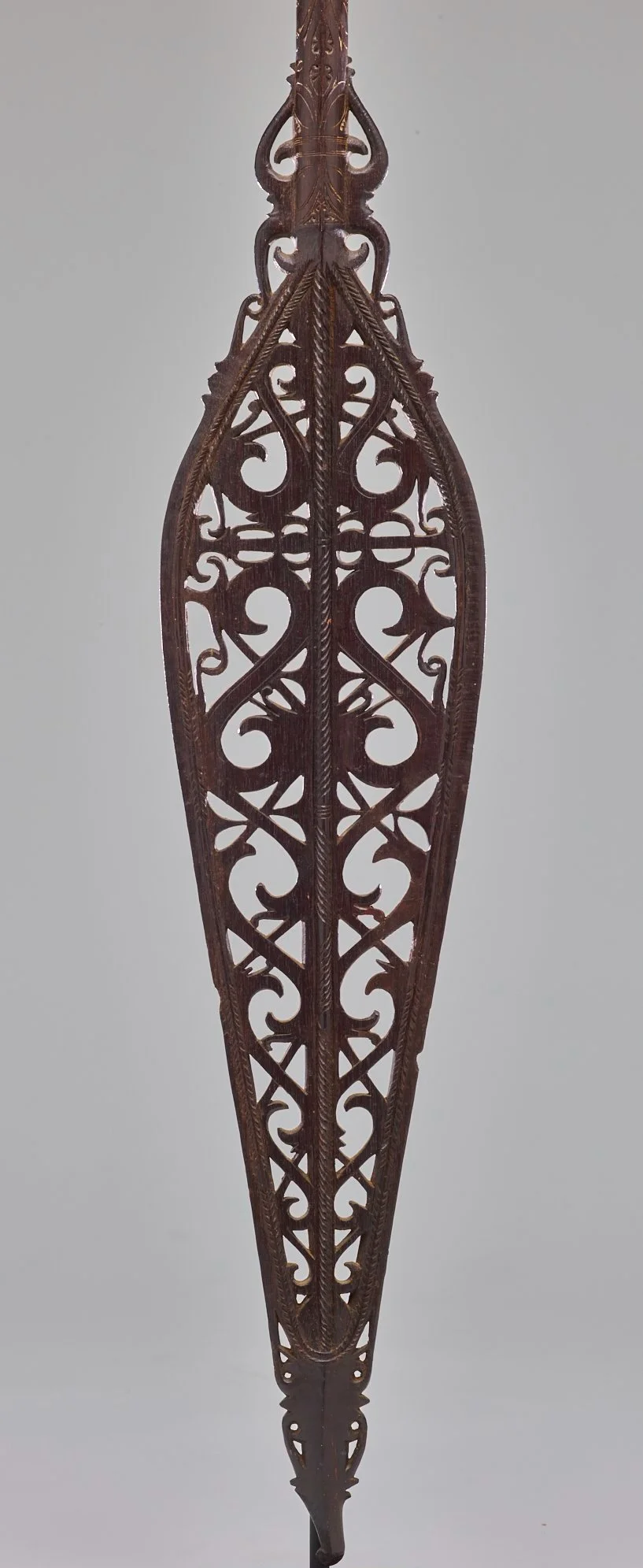
This particular Kenyah/Kayan paddle is a tour du force of the genre. The handle is an interpretation of a native Bornean rhinoceros (Dicerorhinus sumatrensis harrissoni). These are the smallest of all rhinos. They are solitary and nearly extinct and now only exist in very small numbers in Eastern Kalimantan (2016). The paddle's blade is fascinating and fully explored in a most accomplished manner. The rare filigree or thin lace-work is built around eight pairs of protective mythical animals that, in turn, cast their own anthropomorphic shadows in a manner reminiscent of the design found on some tattoo stamps and thin brass work. Paddles rarely rise to the level of being complete works of fine art. This paddle is verily more akin to a beautifully carved workboard or shield.
YOU MAY ALSO LIKE