005: ACROSS THE DIVIDE
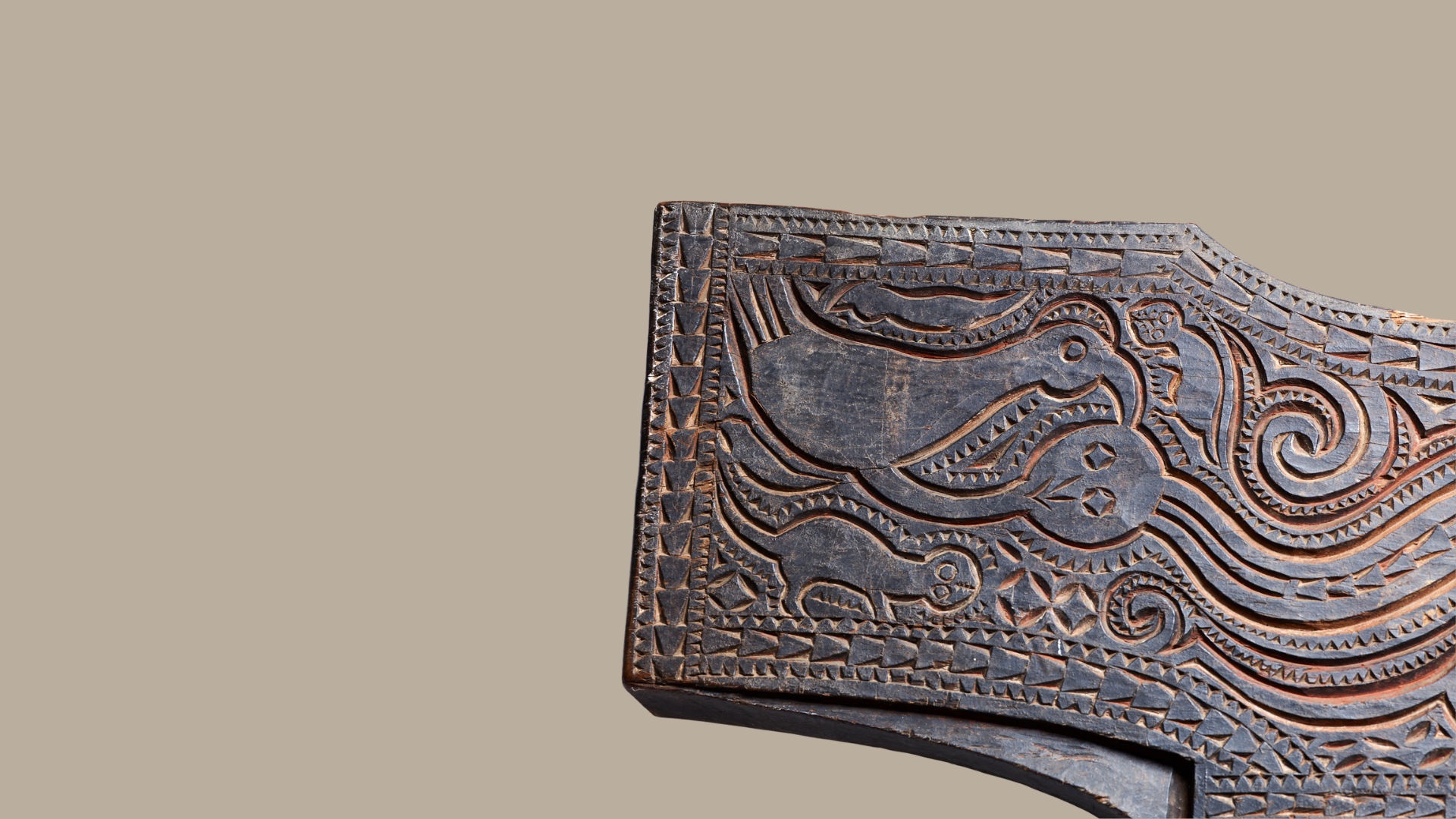
AMPANG
BILIK
C E N T R A L S U L A W E S I
DIVIDING ALTAR FROM AN ARISTOCRATIC HOUSE
-
Late 19th to the early 20th century
-
Tanah Toraja, Central Sulawesi, Indonesia
-
Sa'dan Toraja peoples
-
Wood, natural pigments
-
Height: 57 in (144.78 cm)
Length: 74 in (187.96 cm)
Width/Depth: 3 in (7.62 cm) -
Private American collection
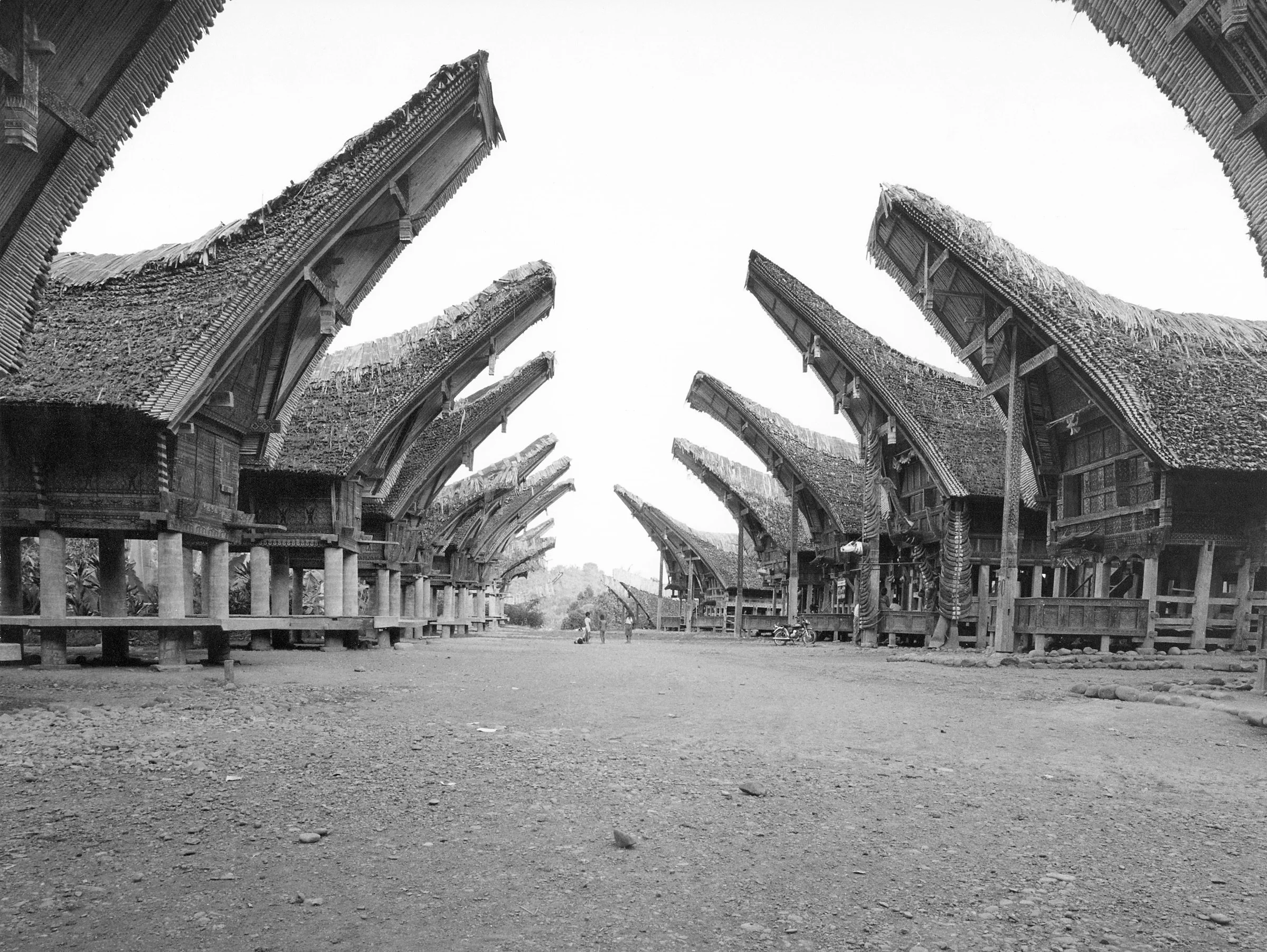
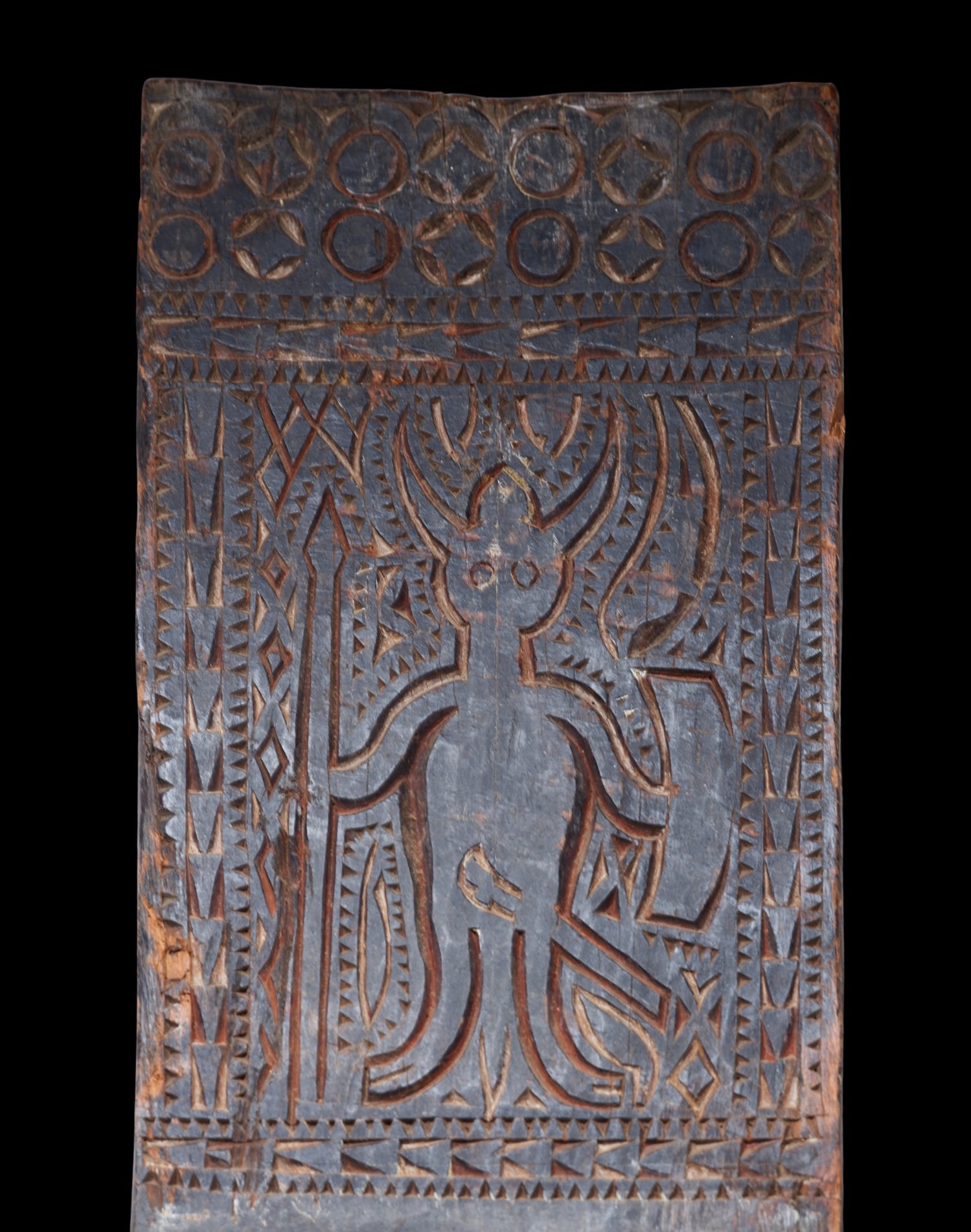
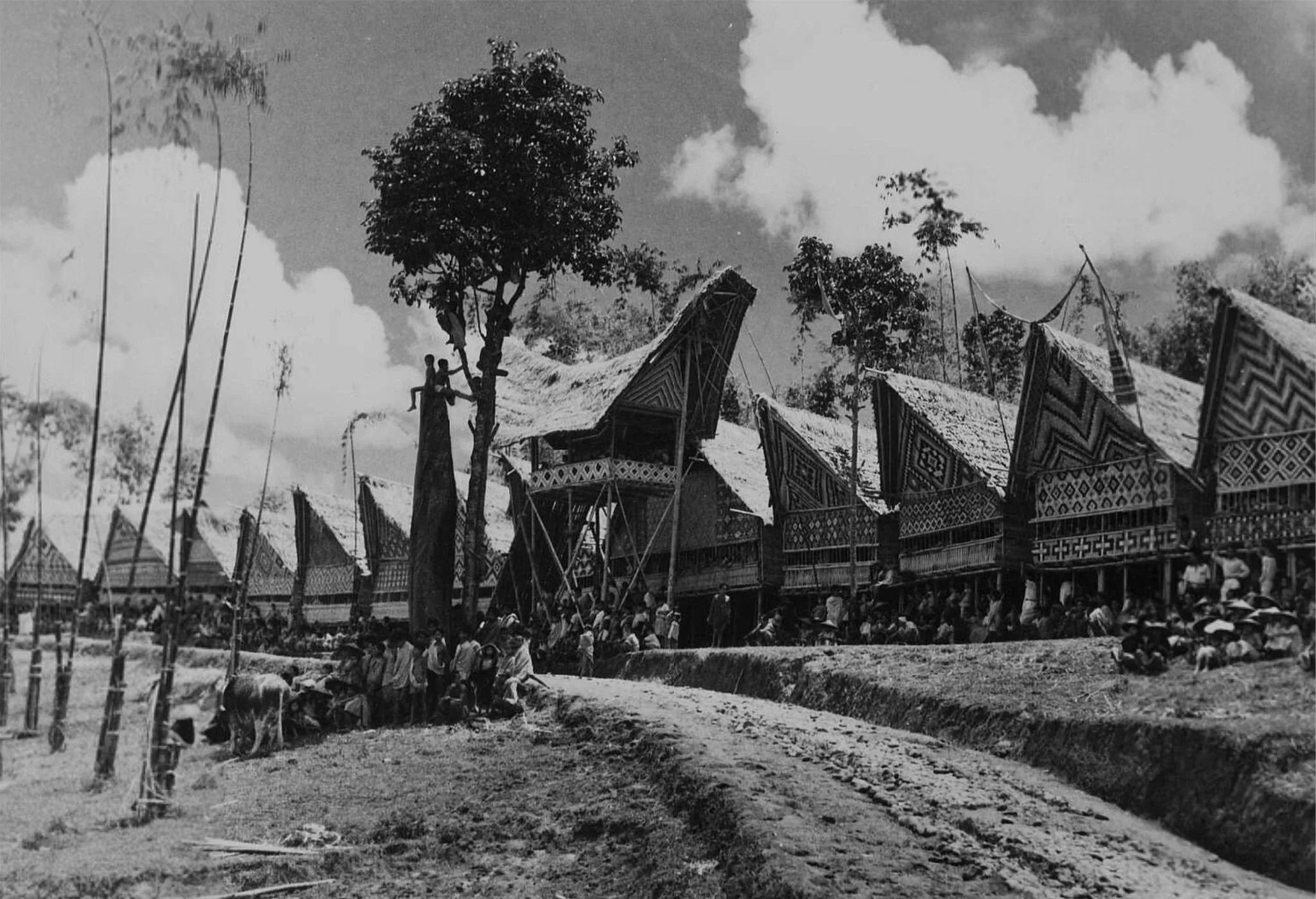
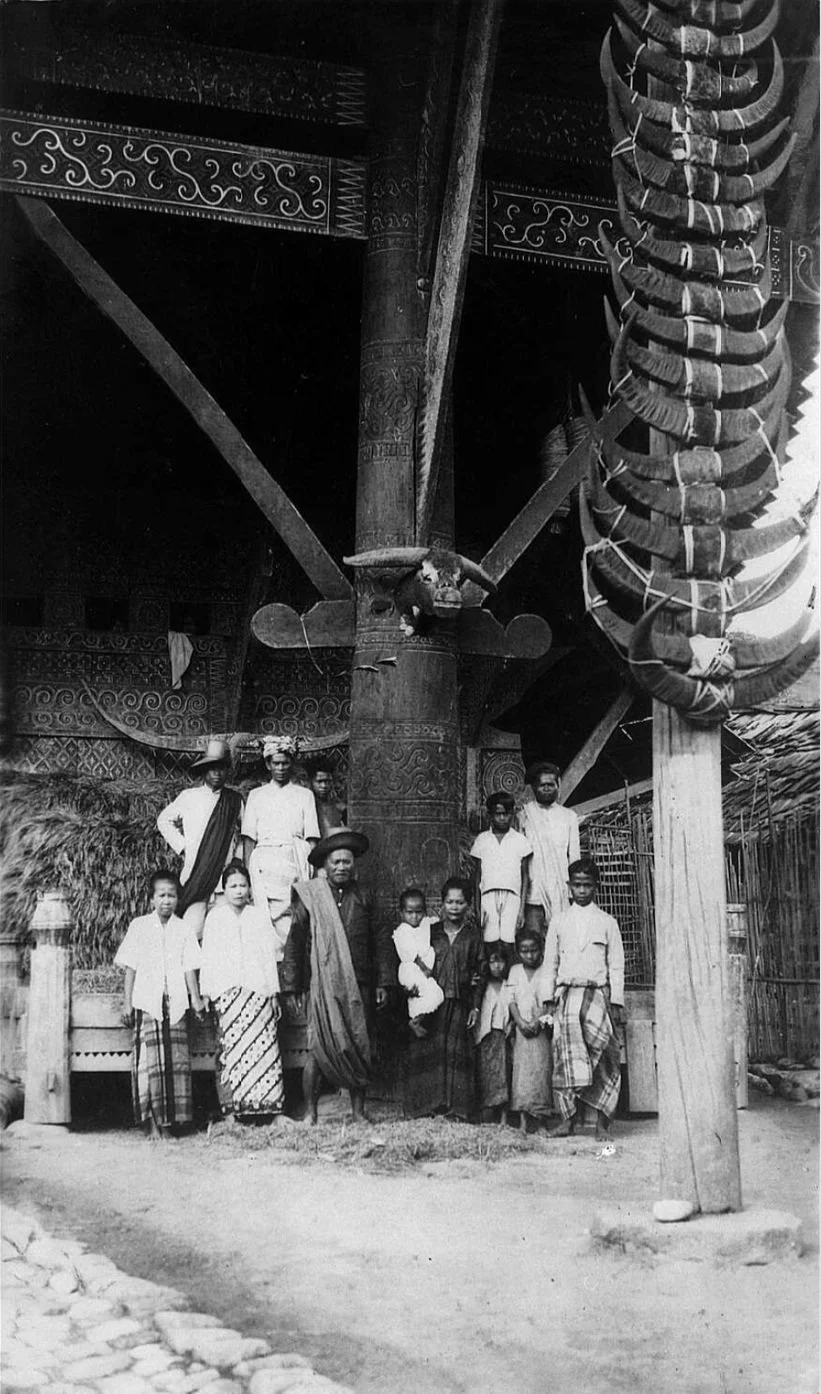
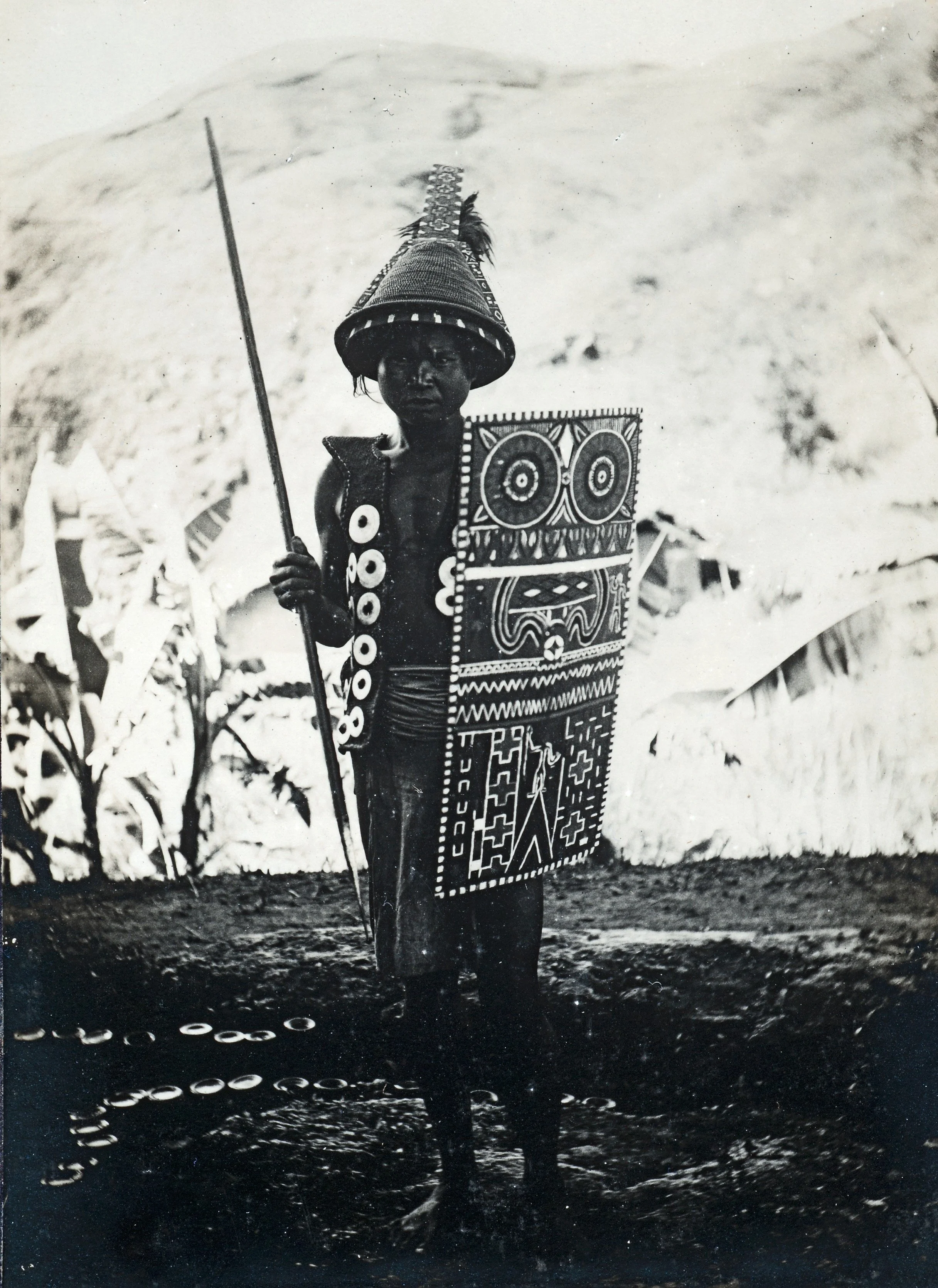
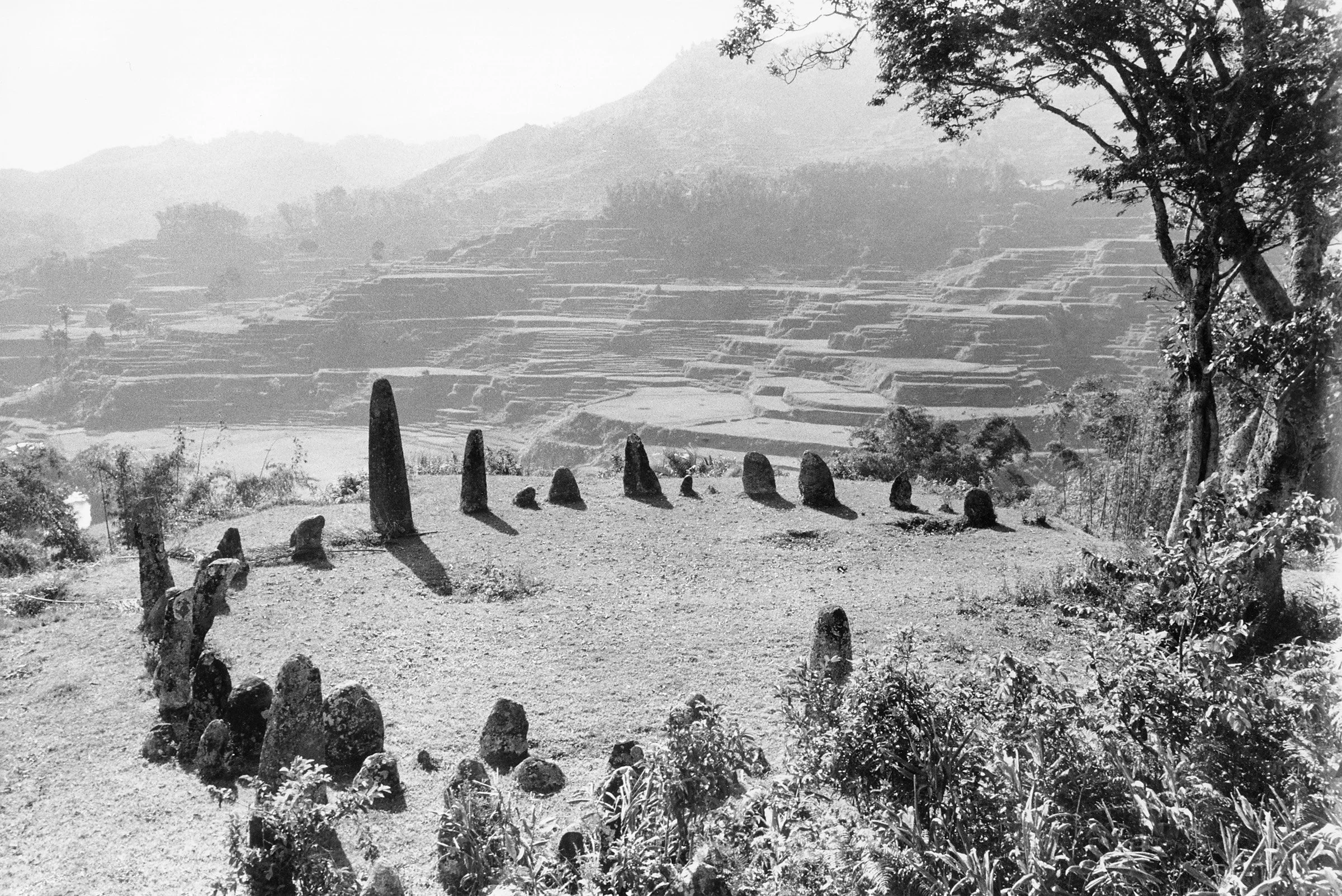
The Toraja peoples inhabit the mountainous region of central south Sulawesi (Celebes). The Toraja are famous for their magnificent and diverse art forms and extraordinary noble houses known as tongkanan. The population, while mostly Christian, has a tiny Muslim minority, though many Torajans still adhere to rituals and local animist beliefs known as "aluk" — or simply "The Way.”
Ampang bilik are positioned with the intention to ritually ensure an aristocratic family's protection from the dangers associated with a soul’s transition after death. The presence of an ampang bilik inside of a great house signifies that it has sponsored or led a very costly bua' feast, involving the participation of the entire village (PC: Donzelli).
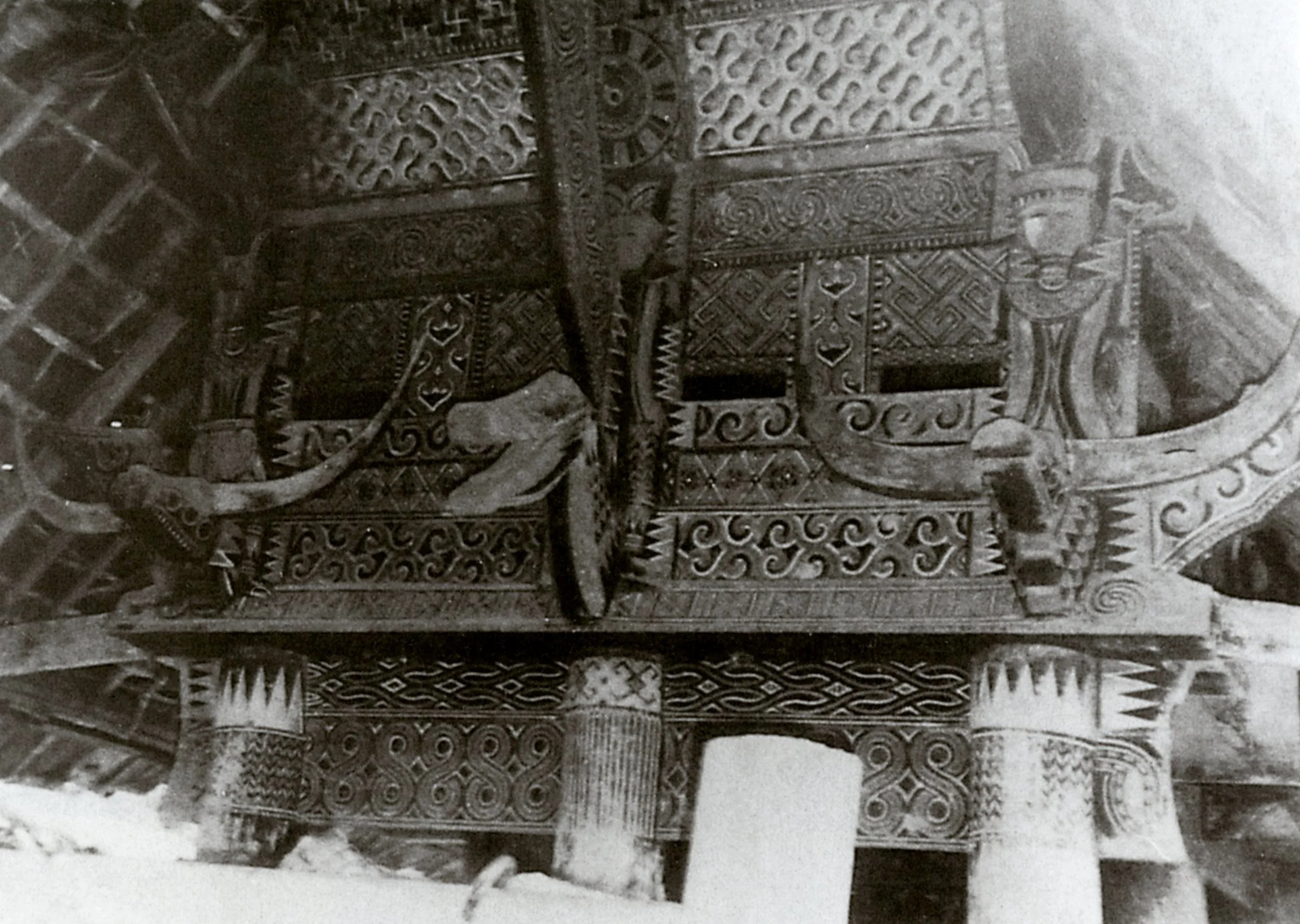
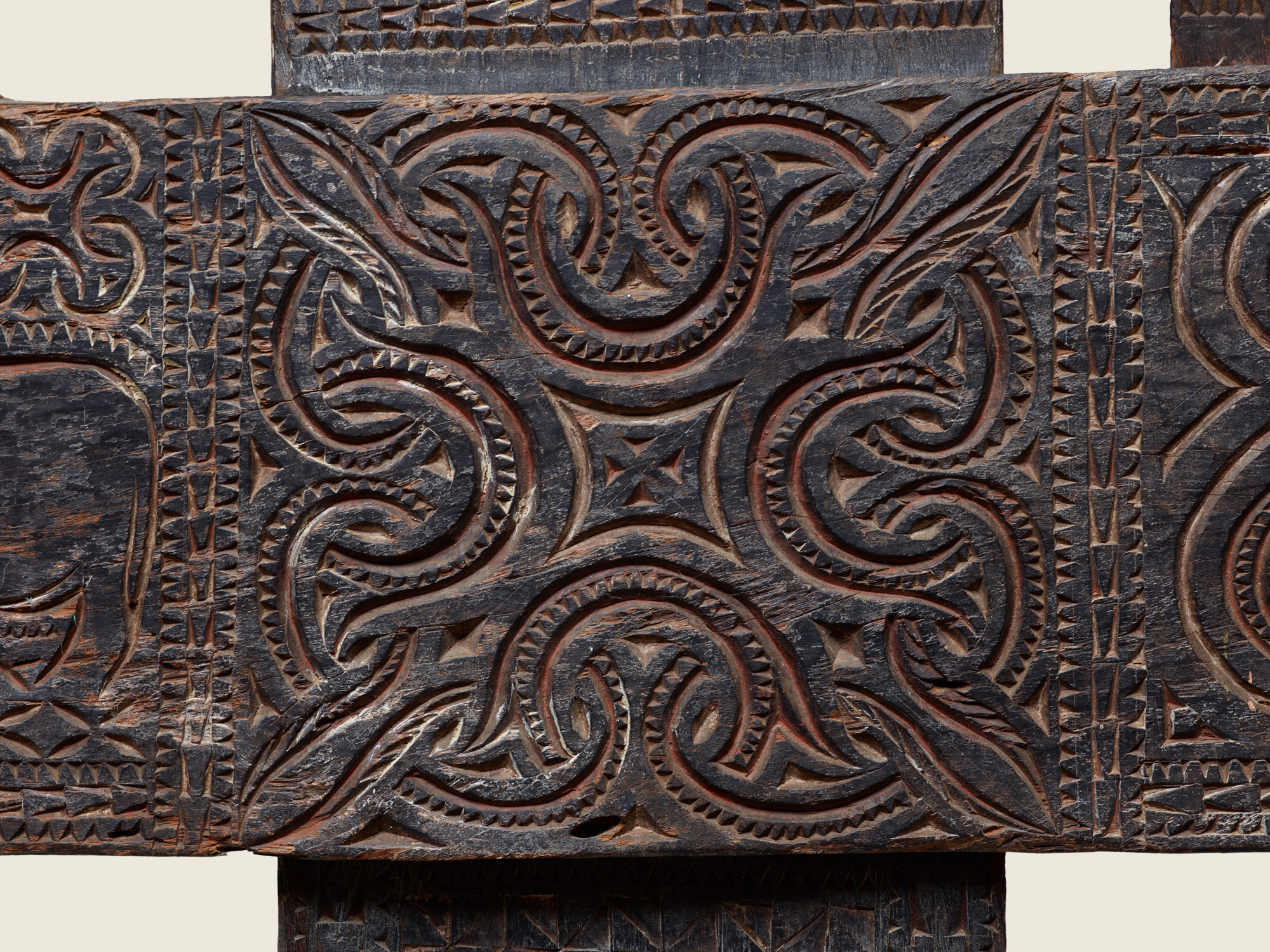
The ampang bilik is situated in the southwestern part of the central room of a great Torajan aristocratic or chiefly house. This construction is shaped like an interwoven fence as it divides the direction of the living from the direction of the dead (See H. Nooy Palm, 1979: 241-44). It combines the qualities of a threshold and altar and is ceremoniously carried in special processions associated with fertility rituals.
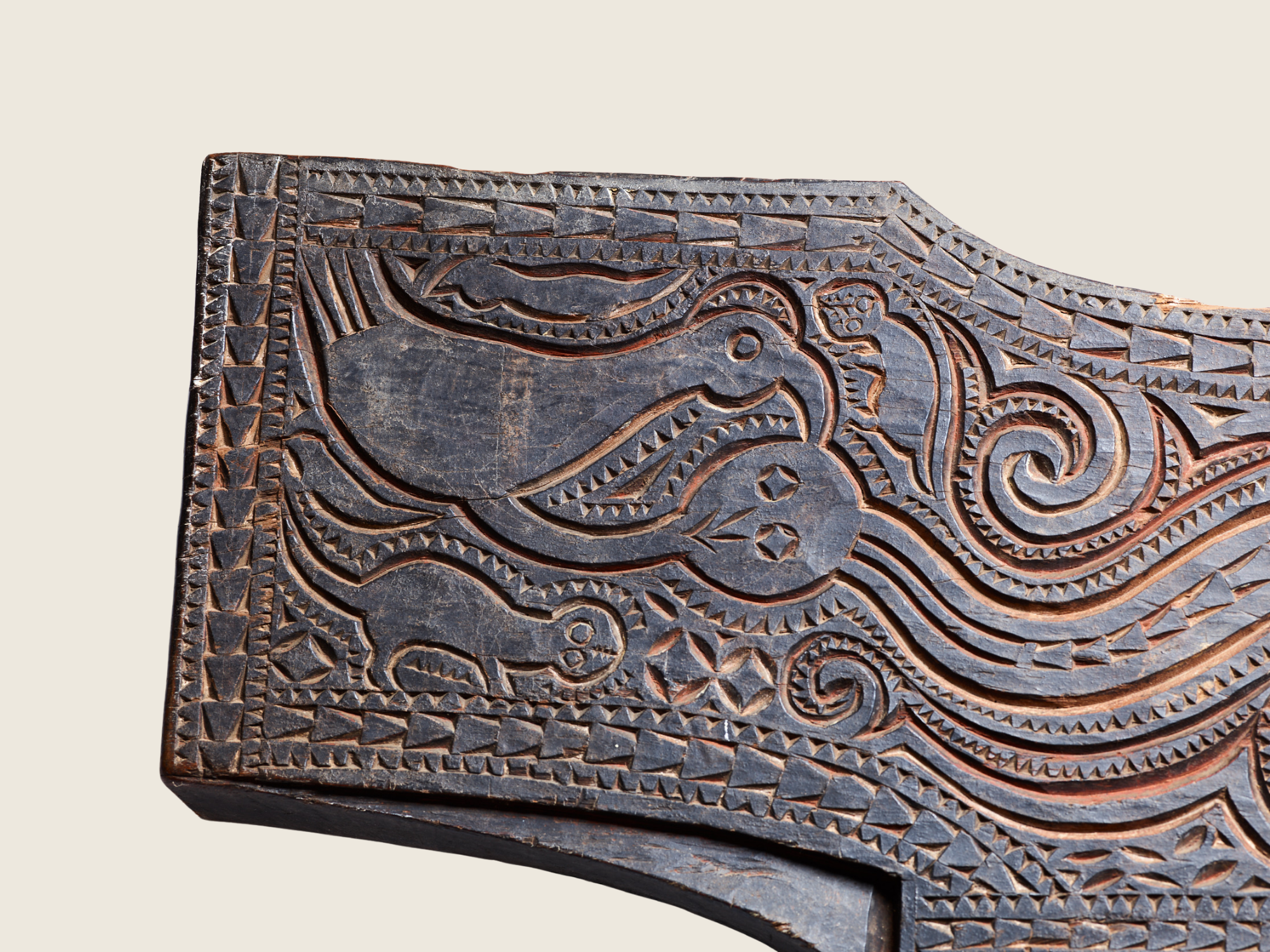
This is a resplendent, very old example of the genre featuring ancient pan-Asiatic symbolism. It can be seen as a protective partition between the living and the afterlife and as a gate or entryway with upper and lower world motifs. Such motifs include avian and serpent, male and female human figures, tokens of wealth, and sacrificial animals.
This offering and another that I formerly placed in the British Museum at the behest of Sir David Attenborough are the finest examples known. This ampang bilik is particularly desirable due to its age, thickness, size, and balance between its horizontal and vertical parts, in addition to its magnificent decoration.